
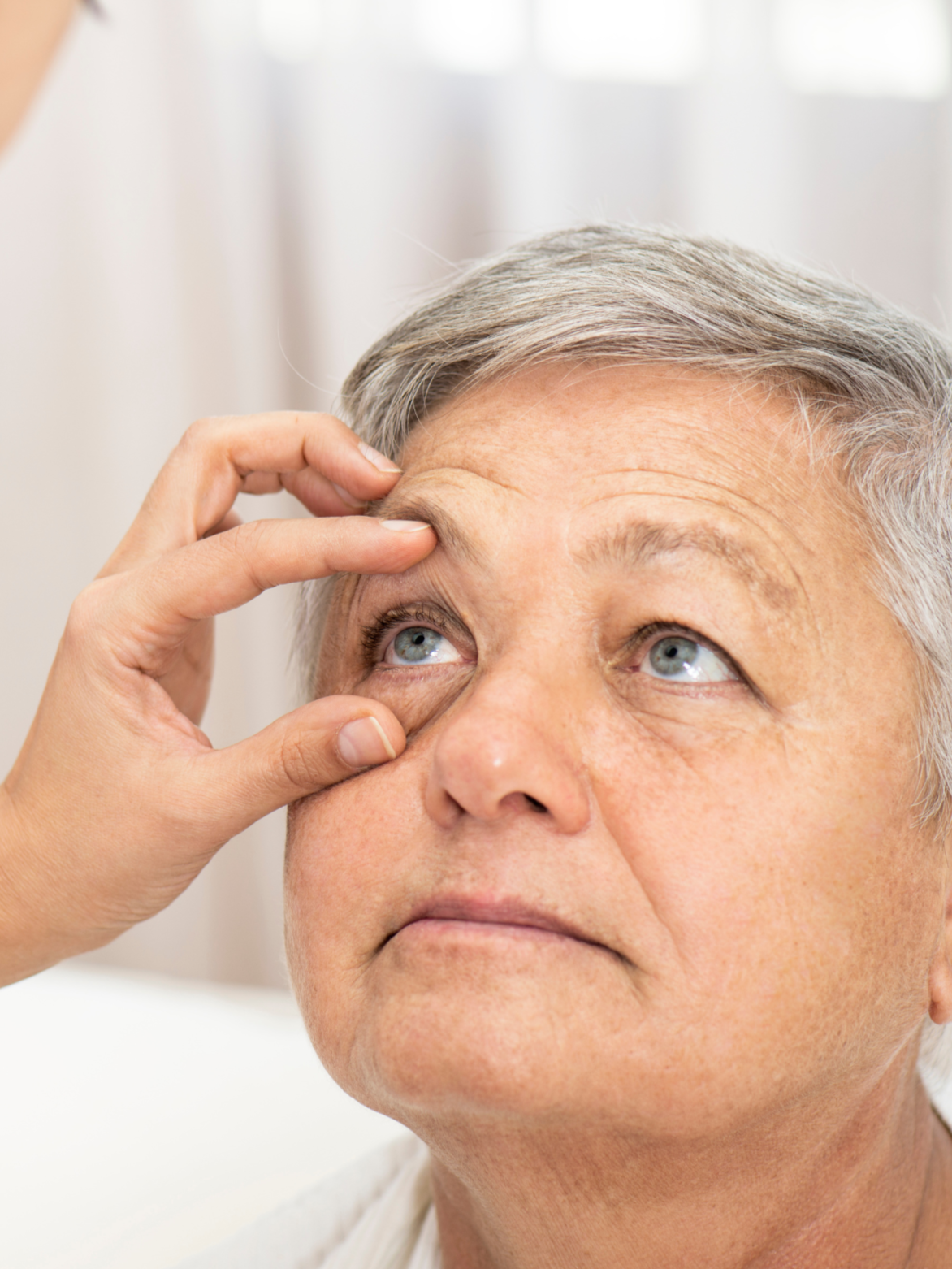
Oculoplastics
Oculoplastics addresses a wide range of conditions including:
-
Ptosis refers to drooping of the upper and at times, lower eyelid. This can affect one or both eyes. It can range from mild to severe.
Causes include:
Age-related stretching of the eyelid muscle
Previous eye surgery or trauma
Neurological conditions
Present from birth (congenital)
Symptoms may include:
Reduced upper field of vision
Needing to raise the chin or eyebrows to see clearly
Eye strain or fatigue
Cosmetic asymmetry
Treatment involves surgical tightening or repositioning of the eyelid muscle. In children, early treatment is important to prevent issues with vision development.
-
A common age-related condition where loose or redundant skin develops on the upper eyelids.
Symptoms may include:
Heavy or tired-looking eyes
Reduced peripheral vision
Skin resting on the eyelashes
Difficulty applying makeup
Treatment is blepharoplasty — removal of excess skin and sometimes fat — which often improves both vision and appearance.
-
In entropion, the eyelid turns inward, causing the eyelashes to rub against the surface of the eye.
Causes include:
Age-related eyelid laxity
Scarring from infection or inflammation
Previous surgery or trauma
Symptoms may include:
Eye irritation or pain
Redness and excess tearing
Sensitivity to light
Risk of corneal damage if left untreated
Treatment begins with lubricating drops for temporary relief, with surgical correction to reposition the eyelid as the definitive solution.
-
Ectropion occurs when the eyelid turns outward, exposing the inner surface of the eyelid.
Causes include:
Age-related tissue laxity
Facial nerve weakness (e.g. after Bell's palsy)
Scarring from sun damage or other skin conditions
Symptoms may include:
Watery or dry eyes
Redness and irritation
Increased risk of infection
Treatment involves lubrication and eye protection, with surgical tightening of the eyelid where needed.
-
These include a variety of benign and malignant growths on or around the eyelid.
Common types include:
Chalazion (blocked oil gland)
Cysts and skin tags
Skin cancers (e.g. basal cell carcinoma, squamous cell carcinoma, melanoma)
Symptoms may include:
A lump, swelling, or tenderness on the eyelid
A persistent or growing lesion
Ulceration, bleeding, or loss of lashes
Treatment ranges from observation in benign cases to surgical removal or biopsy, with reconstruction if needed following lesion removal.
-
Excess tearing occurs when tears cannot drain properly or are overproduced.
Causes include:
Blocked tear ducts
Eyelid malposition (entropion or ectropion)
Dry eye (reflex tearing)
Infection or inflammation
Symptoms include constant watering, blurred vision from tears, and skin irritation around the eyes. Treatment depends on the underlying cause and may include eye drops, probing, or surgery.
-
This occurs when the tear drainage system becomes blocked.
Symptoms may include:
Persistent watery eye
Sticky discharge
Recurrent infections
Treatment is dacryocystorhinostomy (DCR) surgery, which creates a new drainage pathway. Occasionally, stenting of the tear duct may be used.
-
An infection of the tear sac caused by blockage.
Symptoms may include:
Pain, redness, and swelling near the inner corner of the eye
Discharge
Fever in severe cases
Treatment includes antibiotics and warm compresses. Definitive treatment often requires DCR surgery.
-
An autoimmune condition associated with thyroid dysfunction that affects the tissues around the eyes.
Symptoms may include:
Bulging eyes (proptosis)
Gritty or dry eyes
Double vision
Eyelid retraction
Vision loss in severe cases
Treatment includes lubrication and symptom control, medications to reduce inflammation, and surgery in advanced cases (orbital decompression or eyelid surgery).
-
Abnormal growths or inflammatory conditions within the eye socket.
Symptoms may include:
Bulging or displacement of the eye
Double vision
Pain or pressure
Changes in vision
Diagnosis involves imaging (CT or MRI). Treatment — whether observation, medication, or surgery — depends on the underlying cause.
-
Injuries to the bones surrounding the eye, often caused by accidents.
Symptoms may include:
Bruising and swelling
Double vision
A sunken eye appearance
Reduced eye movement
Minor injuries are managed with observation. Significant fractures may require surgical repair.