
Cataract Surgery

Further Information
In most cases the surgery is performed as a day procedure in a day hospital, with the vast majority performed under local anaesthetic.
Your eye will be numb and you will not feel any pain. You do need to be able to lie on you back for the duration of the surgery.
The surgery itself involves making small incisions in the eye and then using a machine to break up and remove the cataract. Then a small artificial lens is implanted.
Generally, the procedure can take anywhere from 15-45 minutes.
You will go home with the eye covered with an eye pad and shield.
Diagnosis
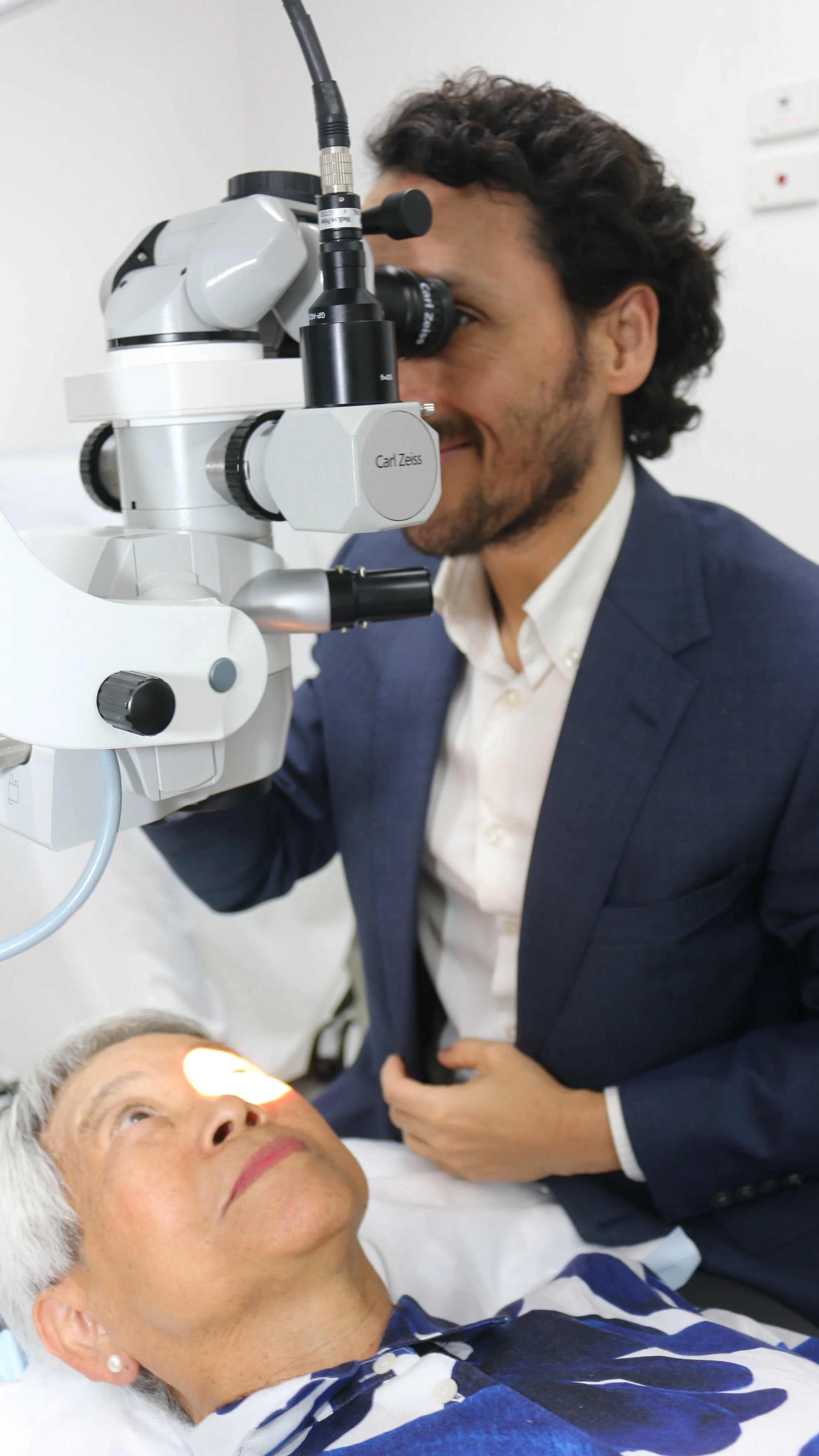
First you need to be assessed by one of our ophthalmologists in the clinic. You will also need to have imaging scans of your eyes which may be done on the same day.
Once you have been assessed and it has been confirmed that you have cataracts, then you will need to book in for cataract surgery.
This can only be confirmed once VisionCare has completed the quality scans required for accurate diagnosis and treatment planning, and you have been assessed for any other eye conditions.
Preparation for Surgery
You will need to fast a minimum of 6 hours prior to your surgery. Small sips of water is usually ok leading up to your surgery.
You will be in the day hospital for 3-4 hours on average.
Detailed information and individualised instructions will be given to you closer to your surgery day.

After Cataract Surgery
You will go home the same day with an eye pad usually 1-2 hours after your surgery.
You will require a follow up either later on the same day or the following day. After this you will need to apply eye drops for approximately 4-6 weeks after surgery.
You will need to avoid heavy lifting for at least 2 weeks, avoid swimming for 3 weeks and keep the eye dry for 2 weeks.
Your usual follow-up appointments will be:
Day 0 or day 1 post-op
1-2 weeks post-op
4-6 weeks post-op